

Yesteryear is a book that is everywhere. It’s stacked high in bookstores and supermarkets, and everyone is talking about this debut book that hit the shelves this year.
Yesteryear may be a book with tradwives as its central theme, yet in addition to this central plotline, Yesteryear also explores so much more. Unhinged yet engrossing, Yesteryear is a brilliant debut.
Book: Yesteryear
Author: Caro Claire Burke
Genre: Literary Fiction
Release date: Out Now
Rating: ★★★★
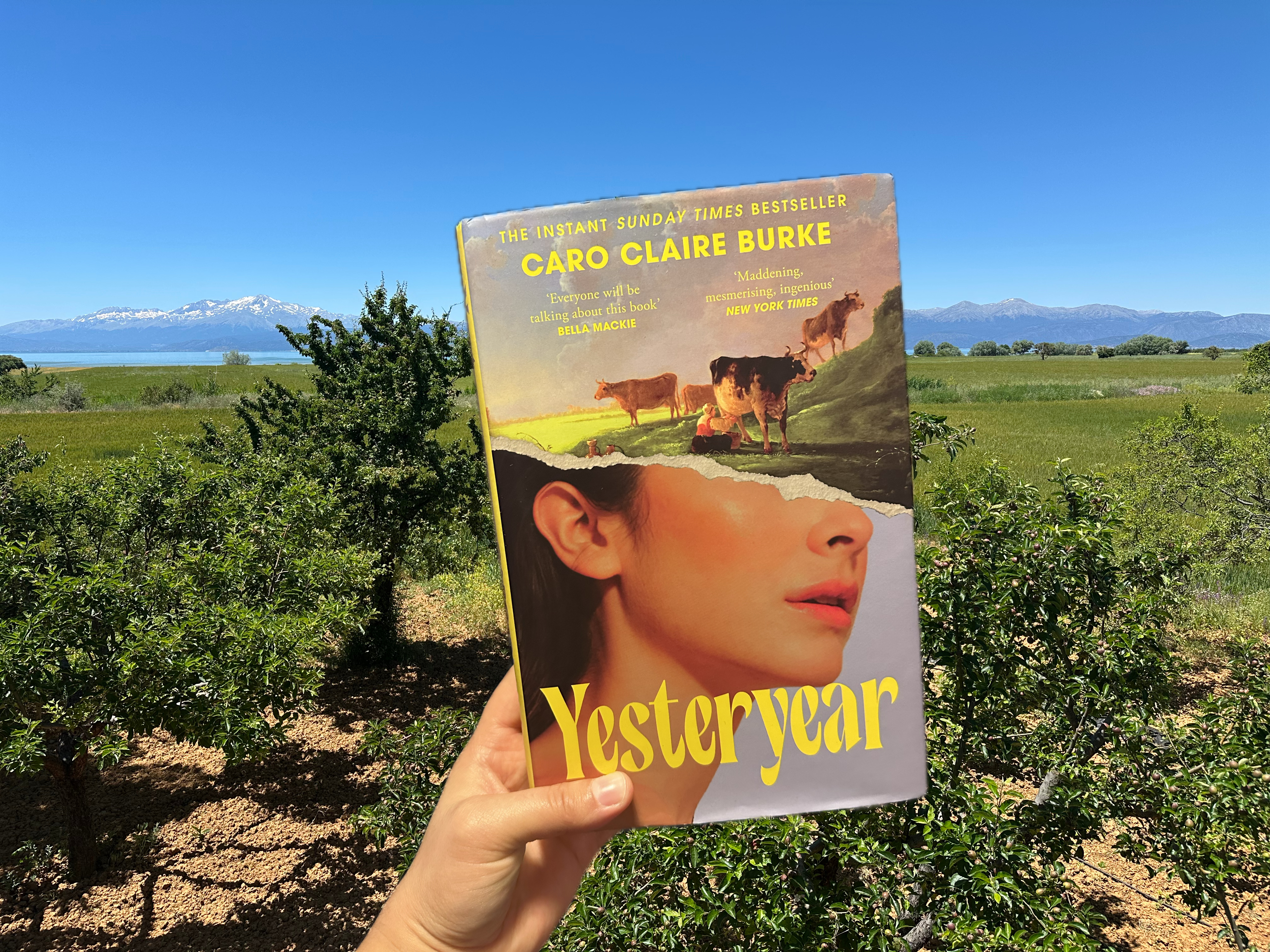
From the outset, Caro Claire Burke’s writing style is addictive. Yesteryear is a book that once picked up, is hard to put down. The short chapters combined with an intriguing story result in a book that, whilst quick and easy to get through, continued to linger in my mind afterwards.
As said at the start, the main theme of the book, primarily, is tradwives. More specifically, tradwife influencers. This is not only a really relevant theme for this book, given the recent rise in influencers online, but also an interesting theme to delve into given how people are currently romanticising this traditional lifestyle a lot more. Whilst it seems idealistic to live on a farm, put on floral dresses and collect eggs from chickens, the reality is a lot harsher, something I think is represented in the book. There are some critiques of the historical accuracy, but in terms of getting the point across in a literary way that is still enjoyable to read about, the book delivers on that – and actually, by the end of the book, these historical inaccuracies make a lot more sense. This theme for the book shines a light on our current society, yet Burke does this in a way that is an engaging read as opposed to the book feeling like a preachy lecture.
One thing to note from the start is that the leading character in Yesteryear is not likeable. That is something made clear very early on. She is pretentious, thinks she is better than everyone – no exceptions – and is infuriating for almost all of the book. However, despite this…there’s something terrifically fun about reading a character so awful. Getting into the mindset of someone who is convinced her way of life is truly the best, someone who has a justification for all she does, who is able to vilify everyone she encounters, is fascinating. The concept of a lead character being so awful is interesting, and excellently executed in Yesteryear. Perhaps what is most chilling is that Natalie is not some big bad villain from a fairy tale; she’s just a normal person who has arguably been brainwashed and becomes more twisted and unhinged as the book progresses – and even at the end (no spoilers, though!) she still thinks she is right and above all others. I actually find that scarier than any wicked witch. She was a fascinating character to spend time with. To read about someone who is just completely out of touch with reality and still, after the very end, tries to convince the readers to be on her side. This kind of character can be hard to get right, to avoid them becoming a caricature or laughable in the process, so to write Natalie in a way where she feels so real is something I found Burke has written very cleverly.
Another interesting element of the characterisation in Yesteryear is that of the children. It is only in recent years that the impact of online influencer life has been discussed in terms of how it impacts children. The impact of Natalie’s life choices on her children is carefully navigated throughout Yesteryear. I found the exploration of the children’s characters was really refreshing, as it is not just a short-term impact this lifestyle can have; the effect can be lifelong. The inclusion of children within the book also raises the important conversations of consent and boundaries that can be universal to anyone on social media. Of course, parents may want to share their children online sometimes, but when does it go too far, and how much content is too much? I found the way Burke’s approach to children of influencers, in this instance tradwife influencers specifically, to be unsettling, but for the right reasons.
Aside from the tradwife themes in Yesteryear, there is a sub-plot of politics interwoven. The politics within the book mirrors exactly what is present in our current climate. Unnerving to read, yet a clear reflection of what certain people are campaigning for and that people are supportive of. The foreboding tone that comes with the theme of politics felt like a big warning – but what better way to raise awareness or to warn people than through literature, one of the most obvious ways to subtly educate people? The inclusion of this in the book made it clear – this book may be fiction, but what is happening in the book is very real, and that is something we can not shut the book and turn away from.
Religion is something else Burke seamlessly wove into the story, approached in a way I found fascinating. Natalie, as previously said, is not a nice person – something that is made very clear. Yet the way Natalie justifies her actions is through her faith, truly believing she is a pious Christian woman, following God’s will. Even when she is a vile woman, treating and judging others in a deplorable way, she is in the belief that she is a perfect example of a Christian woman. Near the end of the book, a character is introduced who is a pastor, and it is only then that Natalie encounters a Christian pastor who is everything she claims to be – and yet Natalie still cannot see them as good. There is an ongoing mantra Natalie tries to follow – to ‘be kind’, as her God wishes. Natalie is far from kind, but is so certain she is following the path her God created for her – whether this is genuine or what she tells herself to absolve her own guilt is something left to reader interpretation, which I love. No one ever really knows what is going on in Natalie’s head, which I think really adds to what makes Yesteryear such a delicious read. Furthermore, this ongoing relation back to religion led to some interesting reflection, least of all being the question of at what point does one stop being religious but use their faith to justify or hide behind their actions?
The themes and thought points mentioned make Yesteryear sound like a really heavy read, and whilst it may seem that way, Burke has skillfully written a book that balances these dense, heavy themes with a writing style that flows. This writing style, combined with short chapters, leads to a book that is addictive and absorbing.
Unhinged and entrancing from the first to the last page, Yesteryear is an absolutely brilliant debut that has got many people talking about Burke’s writing already, for the right reasons.
Yesteryear is out now!


