
This is my third and final post in a mini series about Even More Ghost Stories by Candlelight, where I am interviewing the creatives bringing this show to life. You can read the first post, where I interviewed the director of the show, Elle While, here: https://oneshowatatime.co.uk/2025/10/25/theatre-news-interview-even-more-ghost-stories-by-candelight-heads-to-the-stage-an-interview-with-director-elle-while/ , and you can read the second post where I interviewed some of the writers here: https://oneshowatatime.co.uk/2025/10/30/theatre-news-interview-even-more-ghost-stories-by-candelight-heads-to-the-stage-an-interview-with-the-writers/
Following the sell-out sensation Ghost Stories by Candlelight, Penatbus Theatre and HighTide have collaborated to bring a brand new edition of this show to audiences with Even More Ghost Stories by Candlelight. The show features four spine-tingling tales from award-winning writers and invites audiences into the secretive, spectral corners of the East and West of England.

Even More Ghost Stories by Candlelight has been touring the UK, which commenced on the 6th October, and is now sadly at the last venue, Battersea Arts Centre, where it will run until the 8th November.
You can find out more about the show, where it is running and most importantly, book tickets here: https://pentabus.co.uk/even-more-ghost-stories-candlelight-0
As you will know from the previous posts in this mini series, I got the exciting chance to interview many of the creative forces bringing Even More Ghost Stories by Candlelight to life. Having shared my interview with Elle While, director of the show, and writers Longman, Odeke and Torr, today I will be sharing the interviews with the cast of this show that are bringing these stories.
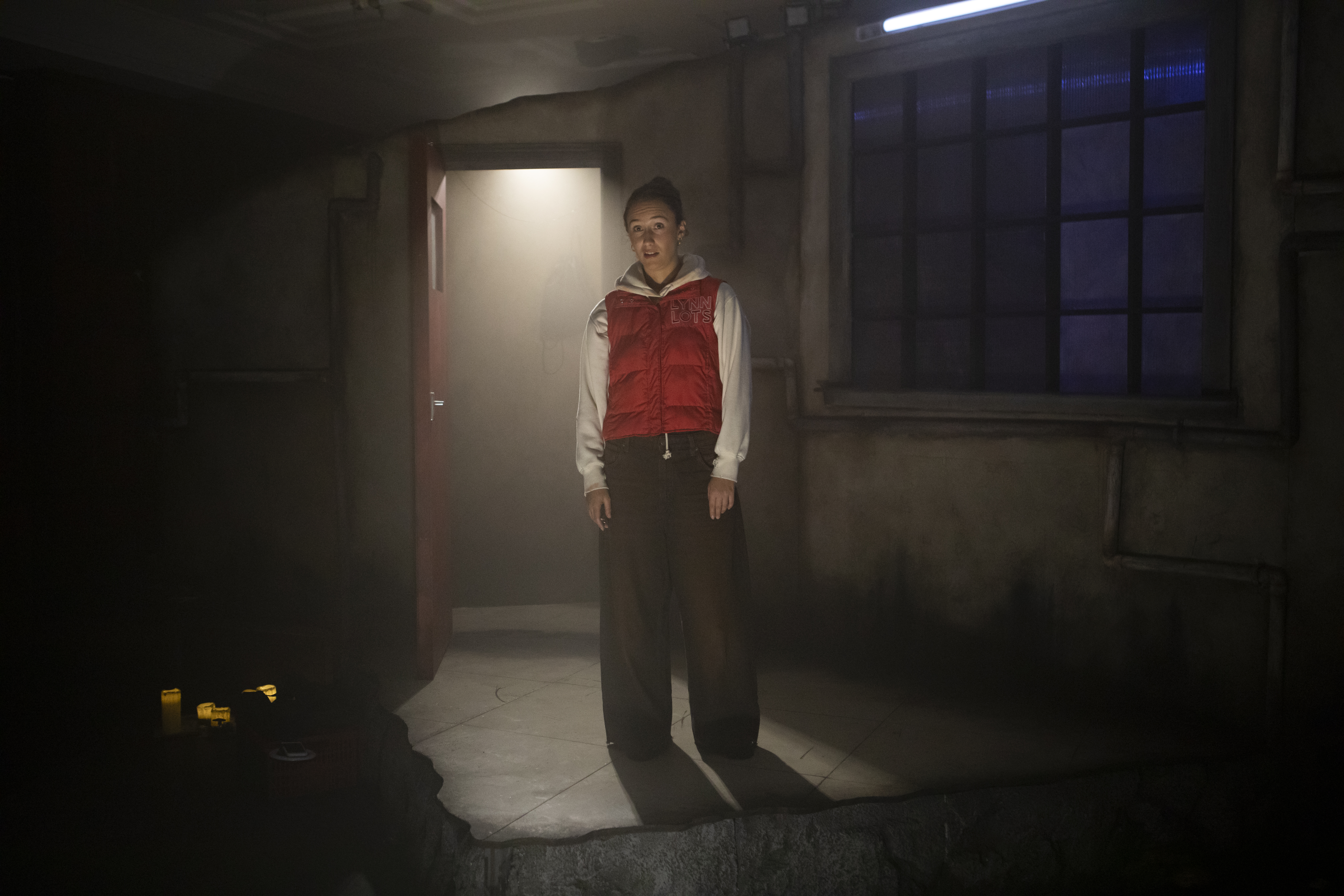
Here is what Keaton Guimarães-Tolley and Sarita Gabony shared with me…
Note: the answers I have been sent back for these interviews have not been edited in any way, shape or form.
Interview with Keaton Guimarães-Tolley

Keaton Guimarães-Tolley trained at RADA and École Philippe Gaulier. His theatre credits include Francisco de Nata (Underbelly, Edinburgh Fringe Festival); Eurydice (Jermyn Street Theatre); Grenfell: In the Words of Survivors (National Theatre/St. Ann’s Warehouse, NYC); Nel’s Place (The Lowry); Edgar Allan Poe’s The Black Cat (King’s Head/Omnibus); Red Riding Hood (Liverpool Everyman & Playhouse); and Much Ado About Nothing (Utah Shakespeare Festival). He is also a clown and musician. His silent solo clown show Francisco de Nata premiered at the 2025 Edinburgh Fringe to five-star reviews and was described as ‘a masterclass in play’ and ‘clown at its most inventive, intimate, and alive’ (Broadway Baby).
Hi, thanks for taking the time for this interview! Let’s start easy – can you please tell us a bit about who you are, and who you are playing in Ghost Stories?
Hi! My name is Keaton, I am an actor and clown based in London. I play Troy in The White Horse by Florence Espeut-Nickless and Rolo in The Takeover by Anne Odeke.
What drew you to wanting to be in this show?
All of it! From the moment I got the email about the audition, I was like I really want to do this. Reading the plays ahead of meeting the team was so exciting – the way Flo and Anne write is so urgent, honest and full of life. Their characters feel incredibly real, which made me instantly fall in love with them and the project. I couldn’t put the plays down; it was really inspiring and energising to read writing that made me want to just jump right into it straight away, I couldn’t not, it woke me up, they’re both incredible. Then meeting with Elle, Titilola, and Hannah completely sealed it for me. Those audition spaces can sometimes feel a bit weird or performative, but they created such a genuine and welcoming atmosphere, which really speaks to who they are as people and artists. It was a no brainer wanting to be a small part of this team and what they were making, it felt very special.
When bringing the show to life, was there anything from your own life or experiences that helped with your characterisation or performance, or are the two quite separate?
Something Elle spoke to us about early in rehearsals for this show that really stuck with me was this idea of fear, and how each person, or in our case, character’s relationship with that thing shapes their individual story – in order to move away from a general feeling toward something more specific for each of them. Exploring that was fascinating. I found myself reflecting on my own experiences with it and how those emotions live in the body. It became a helpful way to ground the characters in something more human, and not intellectualise the thing – allowing it to be body first and head later, which Elle really championed.
Off the back of that, is there anything you’ve since taken away from being in this
show?
The joy and power of collaboration. Working on projects with such clear mission statements, which both HighTide and Pentabus established from the very beginning, creates something sacred that everyone feels invested in and responsibility for. This project has truly been that and a team effort from day one. Sitting around the table with all the departments on the first day was really incredible; you could feel the energy and care everyone was bringing into the room, and had been for months before we even stepped into it. Having such an open dialogue with the director, stage management and the writers throughout has been invaluable, as has been the joy in the room while making. I’ve learned so much about what it means to share an honest space with an audience, and how that dynamic shifts and needs to in every city we visit. It’s been a reminder of the vitality and urgency of live theatre, and how political and necessary it feels right now. There’s a lot I’ll be taking away.
Have you encountered any difficulties in the process of bringing Ghost Stories to the
stage, and if so, how did you overcome them?
My knees! I thought they were doing fine (and they are) but they’ve definitely been put to work! Without giving too much away, Anne’s piece involves lots of movement, and performing the show in all the different churches, theatres, halls, and spaces we’ve been to has been a fun test of stamina, balance, and blind faith in my joints. Luckily, I’ve been gifted some lovely little knee pads for this second leg of the tour, so I’m strapping in for much more cardio and chaos.
Lastly, what do you want people to take away from the show?
Belief. Whatever that might mean for an audience. Maybe belief in story, in the possibility of being moved by something you can’t name, and in young people – in their voices, their instincts, and the things they’re trying to tell us. I think what Flo, Anne, Simon, and Rosa have done and captured with this genre is so exciting; they’ve breathed new life into something that might otherwise feel distant or dusty. There’s so much humanity in the words they’ve all written and each night, getting to speak them in Flo and Anne’s pieces and listen to Sarita perform Simon and Rosa’s work, with Elle steering the ship for us all has reminded me how powerful storytelling can be when it’s alive and shared in this way.
Interview with Sarita Gabony
Sarita Gabony’s theatre credits include Love’s Labour’s Lost (RSC), Our Generation (National Theatre and Chichester Festival Theatre), That Face (Orange Tree Theatre), James IV: Queen of the Fight (Scottish tour), Deciphering (New Diorama Theatre), The Treatment, Little Revolution (Almeida Theatre), The Divide (The Old Vic), and The Sound of Music (The London Palladium); and for film, Mothering Sunday and Spectrum.
Hi, thanks for taking the time for this interview! Let’s start easy – can you please tell us a bit about who you are, and who you are playing in Ghost Stories?
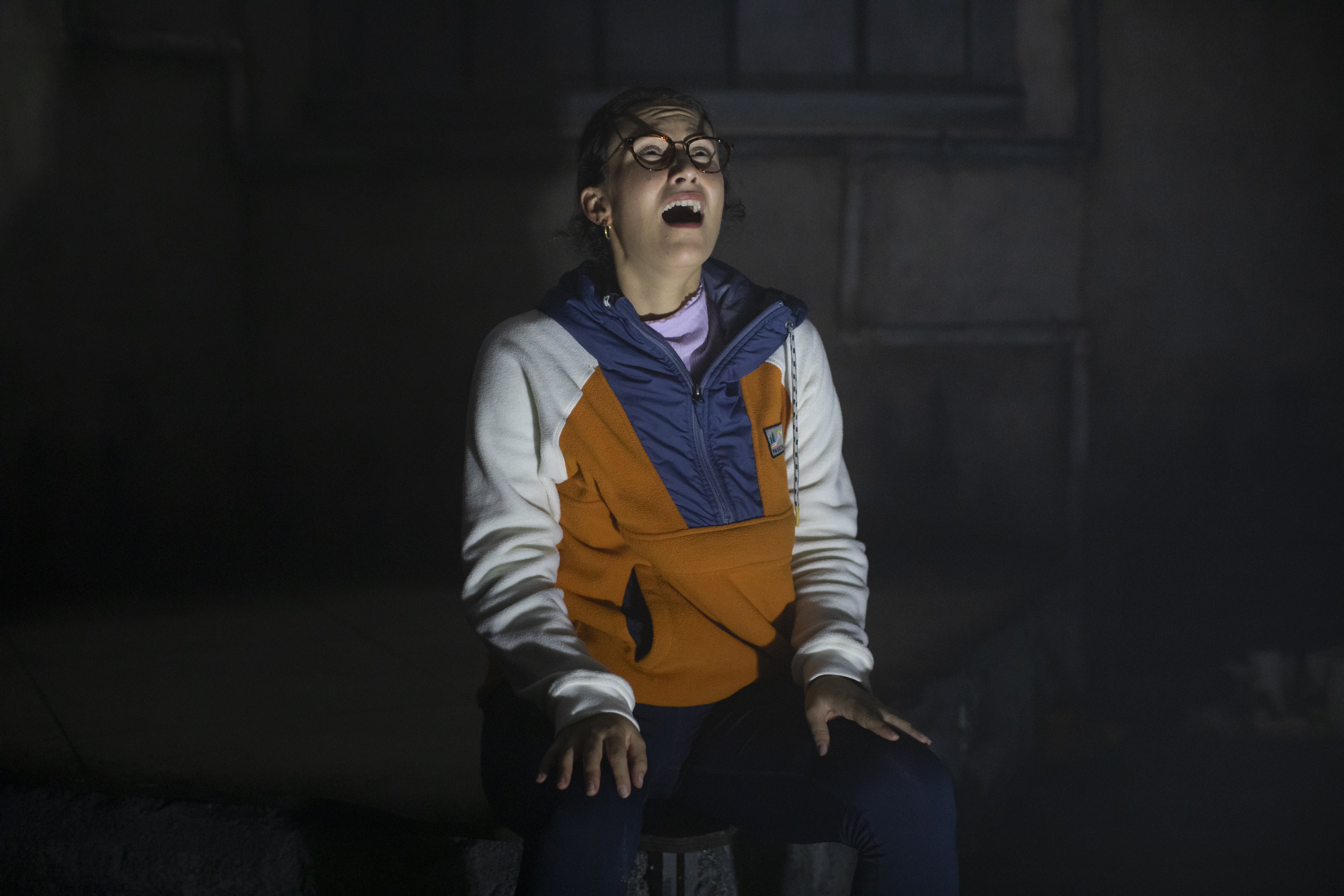
Hi! I’m Sarita Gabony – a London-born actor and director. I perform two of the four one-person shows: Cold Oak Lane by Simon Longman and The Consequence of Diving Lots by Rosa Torr. The plays and characters are so contrasting – it is such a gift of a show for an actor.
Simon’s writing is tender and sensitive and poetic and uses the ghost story construct to explore grief and avoidance through a more mature and contained character. Alex, on the other hand (the protagonist in Consequence), is a wild, cheeky, weird 19 year old bursting with energy and a desire to break “generations of unimportance” and be someone whose life is remembered; the problem is she has been cursed and has only 8 hours left to live of a life that she feels is “rotten and boring and broken”.
Both plays are incredibly moving, relatable and scary in totally different ways.
What drew you to wanting to be in this show?
I always thought the idea of a one person show was completely terrifying, which I think is a pretty good reason to do it. The sense of achievement you get from feeling the fear and doing it anyway is pretty electric.
I also love new writing and being able to contribute a little to the creative process in a dramaturgical sense. Having the writers available to discuss the work with is invaluable.
I have massive respect for both HighTide and Pentabus and the ethos of their companies. It’s a real privilege and a delight to join the gang for a bit.
When bringing the show to life, was there anything from your own life and/or experiences that helped with your characterisation and/or performance, or are the two quite separate?
I think it’s a wonderful mish mash.
Especially as these are one person shows with a stripped back set and few props – we’re relying on the actors’ imaginations to imbue every character and place and description with rich imagery. So in that sense, every actor would have an entirely different library of references to draw upon to interpret the text. Some moments will relate to their lived experience, and some from imaginative research. For example, the creepy character of Fred Waithe whose “two eyes (are) like dark holes drilling down into waxwork”, in my head looks like Elon Musk. When I embody Jenny she’s a dinner lady from my primary school called Janet. Janet was patronising. She used to turn her nose up at me and purse her lips and flutter her eyes shut when she told me off. But you could tell she had a kind heart.
But in a less superficial sense – I hope there’s an unexplainable connection that an actor has with the essence of a character that makes them the right fit for the part.
Off the back of that, is there anything you’ve since taken away from being in this show?
I will take away so much from working alongside the HighTide and Pentabus teams and the other freelance creatives. Because we’ve not had a traditional opening/press night early in the tour, it feels as though the show is still evolving, so you’ll often see a familiar face from rehearsals back to touch up a lighting state or a sound cue. It is such a collaborative process and everyone wants it to be of the highest quality.
Each new venue throws up its own new challenge – whether that be the rake of the stage meaning the door doesn’t swing shut as planned, or literally having to saw the set into smaller chunks to get it up the stairs at Dragon Hall Norwich and then reconstruct it again before 200 odd people show up. It is a remarkable feat what the team have achieved and their problem-solving and resilience is nothing short of inspiring.
Have you encountered any difficulties in the process of bringing Ghost Stories to the
stage, and if so, how did you overcome them?
It’s my first time performing solo, which comes with a range of challenges.
Lines lines lines. In a relatively short rehearsal period, you want to know the text inside out to be able to do justice to the rhythms and nuance of the pieces right off the bat. But once we got through the eggy script-in-hand part and the words seeped into my subconscious I felt really free and playful with it – you can start making choices from an instinctive place rather than a cerebral one.
For the first time in my career I was terrified about forgetting lines because I felt the weight of carrying the whole story; there’s no one there to bounce off, right? I’d have nightmares about getting stuck in a loop and repeating a section again and again. But I’ve learnt that it’s never really a one person show: it’s a duologue with the stage manager, Jodie Hicks, who is cuing the lights and sounds. That gives me great comfort.
And of course, I also have Keaton, who performs the other two plays. Being able to support each other, root for each other and share the experience is very special. Although we’re never onstage together we work as a team to keep the audiences on the journey – disrupting the sober ending of one play with a comedic entrance to the next, for example. It feels like a joint live juggling act every night.
There’s also the stamina needed to go out there and go to those emotional and vocal extremes. But the biggest discovery for me has been realising that it’s actually a positive release – energy-giving, even. I used to think “wow how do actors do THOSE shows, doesn’t their battery run low?”, but in a weird, wonderful way, I’ve discovered that all of that
screaming and crying and shouting actually recharges me. Maybe we all need to do an 80 minute horror show every night to let off some steam.
Also, accents. Just so many accents.
Lastly, do you want people to take away from the show?
Well, of course, to have a wonderfully spooky, funny, emotional and thrilling night out.
But also… it feels like a very distinct time to be touring a show around the UK when our nation is increasingly divided. As we tour, we are dipping in and out of opposing echo-chambers of political opinion in different regions. Online, extreme views are escalating – people seem to be communicating to ‘win’ and not to understand.
There is no winning in storytelling. It’s inherently empathetic. This show especially, as it’s written by four different voices. The simple act of people sitting down in a hall, in real life, turning their phones off, immersing themselves in a story and truly taking time to listen and think seems very sacred. I hope that experience alone is enough for them to take away.
And there you have it! The care and love that these performers have put into their roles is obviously felt, and the journey of bringing the shows and roles to life is something I found so interesting to read. And with that, my last interview has been shared! I hope this gave you as much enjoyment to read as it did for me. I have loved getting to ask questions to all these brilliantly creative people; every interview, I’ve learnt more about the process of getting this show on its feet, and the collaborative work between everyone, every step of the way, from the first to the last stage. Whilst I did not get to see this show, this is the second show of Ghost Stories following the success of the first one, so who knows what the future may hold… In the meantime, all that is left is to wish everyone a brilliant final few shows!
If you wish to catch Even More Ghost Stories By Candlelight before it concludes, you can book tickets here: https://pentabus.co.uk/even-more-ghost-stories-candlelight-0

 One Show at a Time