*I have tried to keep this post as spoiler-free as possible, but there are a few minor spoiler mentions. Nothing major is spoilt, but you have been warned*.

Alice Oseman’s Heartstopper is a graphic novel series that was first published in 2019 and since then has taken the book world by storm. Loved globally, it has a huge reception and a huge fan base. Which meant a lot of anticipation, expectation and hype for the new Netflix series that hit our screens on the 22nd April, myself included.
I cannot speak for everyone, but if my social media is anything to go by, I’d say a lot of people seem really rather happy with how the show turned out. I’d even go so far as to say people seem overjoyed with how the books have translated to screen, myself very much included. The only word that comes to mind for the adaptation is perfect. There is genuinely not one single thing I would change. Except maybe the speed I watched it because now I’m just re-watching the show, wishing I could experience it for the first time again.
The cast who lead this show are wonderful. Joe Locke is the PERFECT Charlie Spring. The shy but lovable Charlie who falls head over heels for someone but following a bad relationship with someone, also knows his worth and knows when he needs to stand up for himself, but struggles to do so in reality. Just a kid learning and finding his feet. Making his acting debut, Joe Locke was fantastic. He won over my, and many others’ hearts I’m sure, stepping into Charlie Spring’s shoes. Charlie was a big role – literally, emotionally and with a lot of pressure, to step into, but Joe wasn’t just pretending to be Charlie, there was no doubt. He really IS Charlie.
Starring opposite Locke is Kit Connor – the PERFECT Nick Nelson. The nice guy who changes quite a lot in quite a short amount of time. Nick starts as a straight kid whose friends make ‘jokes’ – as teens in school do…but by the end of the show, Nick decides he thinks he fits being bisexual, and he doesn’t like nor agree with his friends’ idea of humour, and he’s had enough of listening to them (we’re coming back to this point).
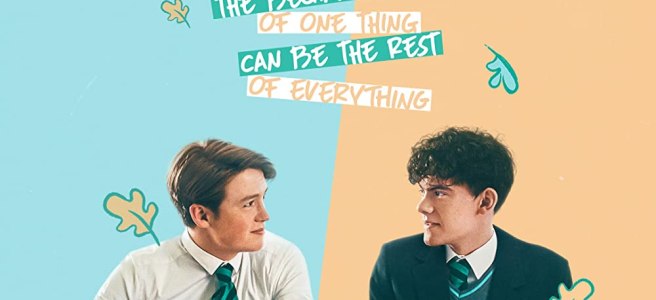
Locke and Connor as Charlie and Nick have such natural on-screen chemistry. The sweet introductions into friendly banter into being best friends and eventually…(un)requited crushes. We see the pair grow on screen in just one series, how they help each other and learn and grow together. You can’t help but love them – both separately and together. We all know those feelings and changes we all went through growing up – finding yourself, having a crush, smiling at just the thought of them. It’s hard not to feel for this pair as they battle their way through school whilst figuring this all out on top of that.

Besides our two young leads, there is Will Gao as Tao Xu. The fiercely loving best friend Charlie needs. Willing to fight everyone and anyone for his best friend, willing to stand by Charlie no matter what. Gao has captured the essence of Tao by finding the perfect balance between a cynical and brutally honest friend, but showing the more vulnerable side of Tao. Above all, Gao manages to show that whatever Tao does, he does it out of a place of love and he’s just trying to do what he thinks is best. You can’t help but adore him.
Paired opposite Tao is Yasmin Finney who plays the gorgeous and lovable Elle Argent. Having been subjected to transphobic abuse, we meet Elle starting at a new all-girls school and facing the scary new girl experience. Elle brings out the best and the soft side in Tao and Finney brings this real air of genuineness to the character of Elle; this combined with her bubbly and lovable personality we see on screen makes it hard not to love Elle instantly.
Becoming Elle’s fast firm friends are Corinna Brown and Kizzy Edgell as Tara Jones and Darcy Olsson. Similarly to Charlie and Nick, the pair’s on-screen chemistry feels so real and believable, that I found myself instantly rooting for them and just wanting them to be happy! They too face the difficulties that come with coming out at school, but having each other to face these difficulties with. And again, similarly to Finney, they both have this beautiful bubbly and loveable energy around them that I never for a second doubted that I adored these characters and Brown and Edgell’s interpretations of them and how they brought Tara and Darcy to life.
The three girls – Tara, Darcy and Elle – together also have brilliant on-screen chemistry. Tara and Darcy are the best friends Elle needs and it’s heartwarming to see Elle make friends she deserves at her new school and who make her happy.
The whole cast is just fantastic. Those we see on screen a lot, to those who we see fleetingly. They all just *get* the characters, embody them and bring them to life in the most perfect way imaginable. There’s never a moment of doubt, and everyone just shines through in their own way. I also love how although the show is primarily about Charlie and Nick and their relationship and growth, everyone else gets their moments to shine and have their own stories come through.
I also appreciated seeing teachers who were supportive of their LGBT students – a small detail, but an important one! Sometimes it can be easier to start off by talking to teachers than family, so it was nice to see that Charlie had teachers who were ready to support him if he needed it.
Tori Spring, brought to us by Jenny Walser is the ultimate big sister. She doesn’t show too much gushy affection and teases Charlie no end but is clearly there for him no matter what, gives the best hugs and comfort when needed but can also give the honesty a sibling sometimes needs to hear. Tori may not be on screen a lot this season, but the few glimpses we have of her in those scenes made me love her instantly.

I do want to add, however, that Nellie is the real star of the show. Sorry everyone, but Nellie is 100% the best girl.
One of the things about Hearstopper that has made so many people love it, is that it is real. Both the graphic novel and the series. It’s brought comfort to a lot of people because of how happy the content is – it’s a series about ordinary people everyone can relate to, just a group of friends finding themselves, friendship and love – and these people just so happen to be LGBT. And the show is diverse not only in terms of sexuality but also in ethnicity! That is the kind of natural representation we need more of. On top of this, Heartstopper is an LGBT series that’s not centred around trauma. So many LGBT stories on screen and on-page have trauma as a central storyline and it’s so crucial – to adults and to teens and kids growing up today – to see that there’s more to being LGBT than trauma. This show is pure joy and it’s beautiful and needed.
However, having said this, Heartstopper also does not shy away from the real issues a lot of teens struggle with every day, and actually…that content is needed. It doesn’t glamorise nor romanticise what it’s like to be growing up, especially for someone who is LGBT. Being LGBT is something that shouldn’t be a big deal, but sadly it is. The reality of being out at school and the ‘jokes’ made at school (that aren’t funny but people say anyway), is handled realistically but maturely. It’s not always pleasant to watch, but it is needed in order to highlight that it happens, it’s not okay, and it’s what people go through every day, even though in 2022 they shouldn’t have to.
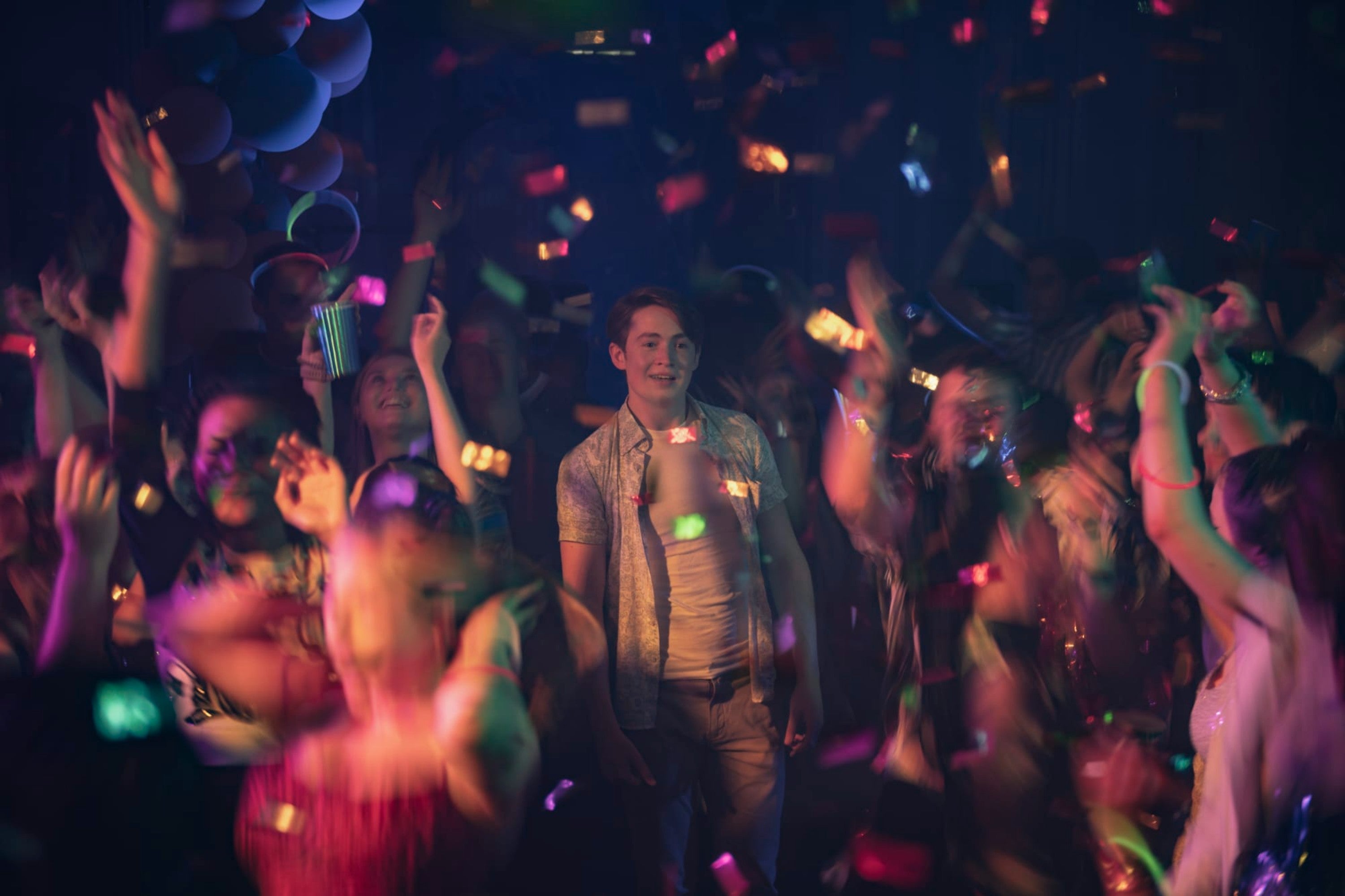
The confusion and emotions we see Nick going through when he is questioning his sexuality really pulled at my heartstrings. The emotions are so raw and such a reflection of what people go through when they’re trying to come to terms with who they are. The tears, the googling, the re-evaluating all your previous years, seeing things in a new light. It all feels so real.
I also just want to take a minute to appreciate that when Nick realises he is not straight and he likes Charlie, Heartstopper doesn’t instantly make him suddenly gay, but rather bisexual. I appreciate it’s entirely individual based on how someone identifies with their sexual orientation, but there’s a lot of bisexual erasure in media, and it was nice to see Nick identify as being bisexual and have that exposure.
Now, getting back to the point about Nick calling out his friends for making ‘jokes’ and comments that aren’t okay. Ben Hope and Harry Greene, played by Sebastian Croft and Cormac Hyde-Corrin are the typical bullies; they are both clearly having their own issues and securities, but it is unfair and wrong to push these issues onto and take them out on other people and behave in such cruel ways.
Ben in particular is clearly having issues where he is questioning his own sexuality and is insecure, but what is a really crucial point for the show to highlight is that yes this is valid. Being young, questioning your sexuality and being closeted can be a struggle and there is no rush to come out before you are ready – but that does not in any way, shape or form mean you can behave in a way that is unacceptable nor treat others poorly – from the homophobic ‘jokes’ to his assault on Charlie. The show demonstrates that this is not okay and was a really important thing to be highlighted.
Nick’s realisation his friends – particularly Ben and Harry, providing the brunt of the homophobia – aren’t nice and aren’t the sort of people he wants to be around and associate himself with anymore was admirable to watch. It’s easy to call out people you don’t like, it’s harder to call out people you are friends with and see all day every day and can’t really avoid – like at school. This was such an important thing to highlight – just because someone is your friend, doesn’t mean you can’t tell them some of their actions, words and behaviours are unacceptable and hurt people. And in fact, calling out your friends on what is unacceptable is crucial, and standing by is just as bad, so it was nice to see Nick stand up and speak out.
The details in the Heartstopper adaptation have all elevated this show, and you can tell they’ve all been thought through to the nth degree. The music used throughout always matches the scene perfectly, the lyrics and the tempo directly mirroring what is happening on screen. I know that is the purpose of music in media, but I was beaming at how perfect the used music was! The costumes. They were literally Alice’s graphic novel illustrations brought to life. Granted, some of these teens’ fashion styles are far better than I could ever aspire for. But, I loved it nonetheless.
The graphic novel screen elements – the leaves and flowers, the stars – all the cute little illustrations and the little imaginary cutaway mini-scenes Charlie sees in his head…these brought the graphic novels to life, a little nod and homage to how this series came to be. These mini-scenes capture what it’s like to be young and in love, and that goes for not only the good stuff, the bad stuff – such as the ‘darker’ and ‘bad’ scenes we see through Charlie’s eyes, as a vision of what it’s like to be in Charlie’s head. Again, it just makes the show that much more real and honest. The cinematography is stunning, and one very small detail that I really liked was in episode one when books fall out of Charlie’s locker – they’re the same colour as author Alice Oseman’s books! Every detail has been carefully considered and placed – the rooms of the characters we see are directly translated from page to screen, from the posters on the walls, to the books and bits and bobs scattered around the room. These little details do the same on-screen as they do in literature – really immerse me into this world and story.

The mixed media was an element I really enjoyed seeing. The texts and Instagram profiles and such. I loved getting to see glimpses of characters’ Instagram profiles – again showing just how much thought and detail has gone into the show, how much depth these characters have, and how much they’ve been brought to life. Through the use of this mixed media, we got to see that first difficulty of texting someone you like – of the funny wiggling your hands do as they hover over the keys when you don’t know what to say. The checking your phone every few seconds to see if *they* have messaged. All of these details combined really add to the show.
Heartstopper feels like the definition of young love, heartbreak and friendship. Joy. Queer joy. This is the perfect adaptation of the novels – it feels as if the novels went through a magic filter to make them real, and this is what we got. All the iconic scenes perfectly translate onto screen – the first introductions, the snow scene, the rain scene (okay I’m just going to end up listing the entire show if I carry on). As is the way with adaptations, there are a few small changes, but they don’t feel wrong or out of place, or make me angry unlike with some book adaptations (Percy Jackson movies, I am looking at you). This is because the show’s heartfelt content is not lost and the show is still so perfect in every single way, I just couldn’t complain about anything at all – nor would I want to. This is exactly what I wanted from the adaptation and more. Perfect doesn’t even come close.
Heartstopper covers mature themes in a mature way that is accessible to a wide audience. The novels and series have found that line between covering these themes in a way that highlights them without it being too intense for a show that will be watched by people of all ages, including some younger audiences. It covers sexual assault which we see in episode 2, between Ben and Charlie – especially highlighting that assault against males is real, not a joke and needs to be taken seriously. Mental health is covered – the anxiety and insecurity we see present in Charlie with the insights we see into his own mind, and the effects a toxic relationship can have on someone. There are even some hints to an issue we see Charlie face in later volumes of the graphic novels (which I won’t name to avoid spoilers), and of course, it covers the issue of homophobia still being present in schools – ‘jokes’ by students, and even a brief mention of a teacher being transphobic.
The importance of a good support group present throughout the series made my heart so very happy. It’s hard to be yourself if you don’t have a strong group of friends, especially in school and even more so if you’re LGBT – school kids are mean and that is just a fact. But Nick, Charlie, Tao, Elle, Isaac, Darcy & Tara are the best support group for each other. Ready to offer advice, make each other laugh or even just provide a shoulder to cry on and a much-needed cuddle when needed.

Within this support group, I adored watching the representation of male affection in friendships! Boys who are friends can hug and tell each other they love each other – and they should! Tao and Charlie are the best friends they could wish for and it’s heartwarming to see them show this affection to each other. I also really appreciated seeing Charlie and Tao apologise to each other when Tao feels like Charlie has forgotten his friends for Nick; it was nice to see them just apologise, hug it out and go back to being the best friends we know and love. Boys have this expectation to hide their feelings and this scene completely breaks down that stereotype. On that note, I want to bring attention to another stereotype that the show breaks down. Even now in 2022, there are preconceived notions of what someone who is not straight is expected to look and act like. But Nick is a seemingly typical teenage masculine sports boy who is not straight after all – and that in itself is breaking down a stereotype – and I think that is fantastic.
Finally – The coming-out scene. That is how it should be for every queer kid. Who knows, it may help queer kids, it may help parents. It was so well done and so needed. I couldn’t have written this whole piece and not at the very least mentioned it. I loved it and it was perfect.
The thing about Heartstopper is it means a lot to a lot of people. It means a lot to me. Even after writing all this, I can still think of so much more I want to say (but I think I’ve said more than enough… on here anyway! If anyone wants to chat to me about Heartstopper some more, you know where I am!).
Heartstopper feels like a warm blanket, a hug in the shape of a show. It felt like this for me when I was reading the graphic novels so I am so glad the series brings me that same feeling of comfort and warmth. It brings me so much comfort even at my age, so I can only imagine how I’d have felt watching it when I was really struggling and really needed it when I wasn’t sure who I was.
Heartstopper is the show kids growing up now need. It’s a show for LGBT kids, teens, adults, everywhere. It’s a show for everyone whether you’re LGBT or not. It’s a beautiful breath of fresh air and what the world needs right now, what the world has needed for a while. Heartstopper is the show I wish I’d had when I was growing up.
And now, I’m off to watch the show again for a third time. Yes, already.
*All photo credits to original owners, I have no rights to any of the images used*.

 One Show at a Time